
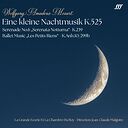
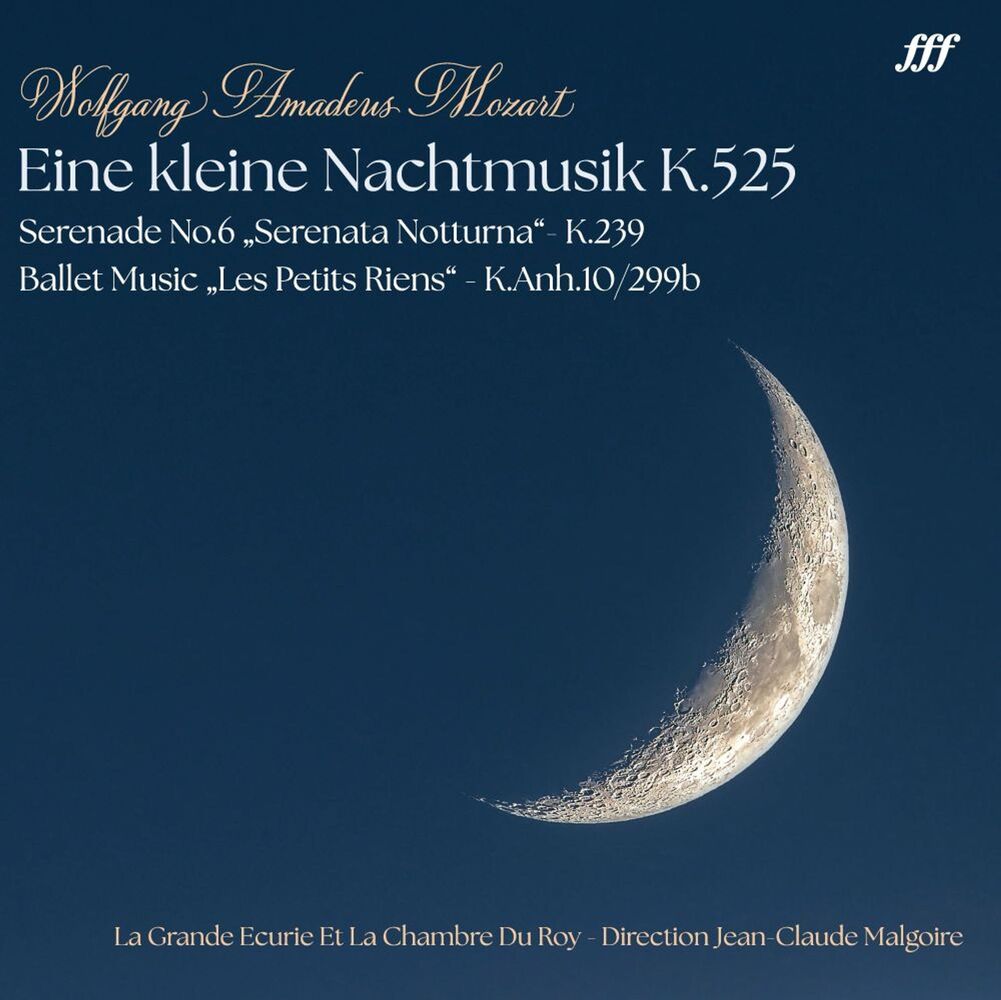
Jean-Claude Malgoire & La Grande Ecurie et la Chambre du Roy Mozart Eine Kleine Nachtmusik K.525
- Бренд
- GAMA MUSIC
- Артикул
- 4260277748784
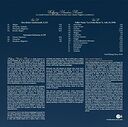
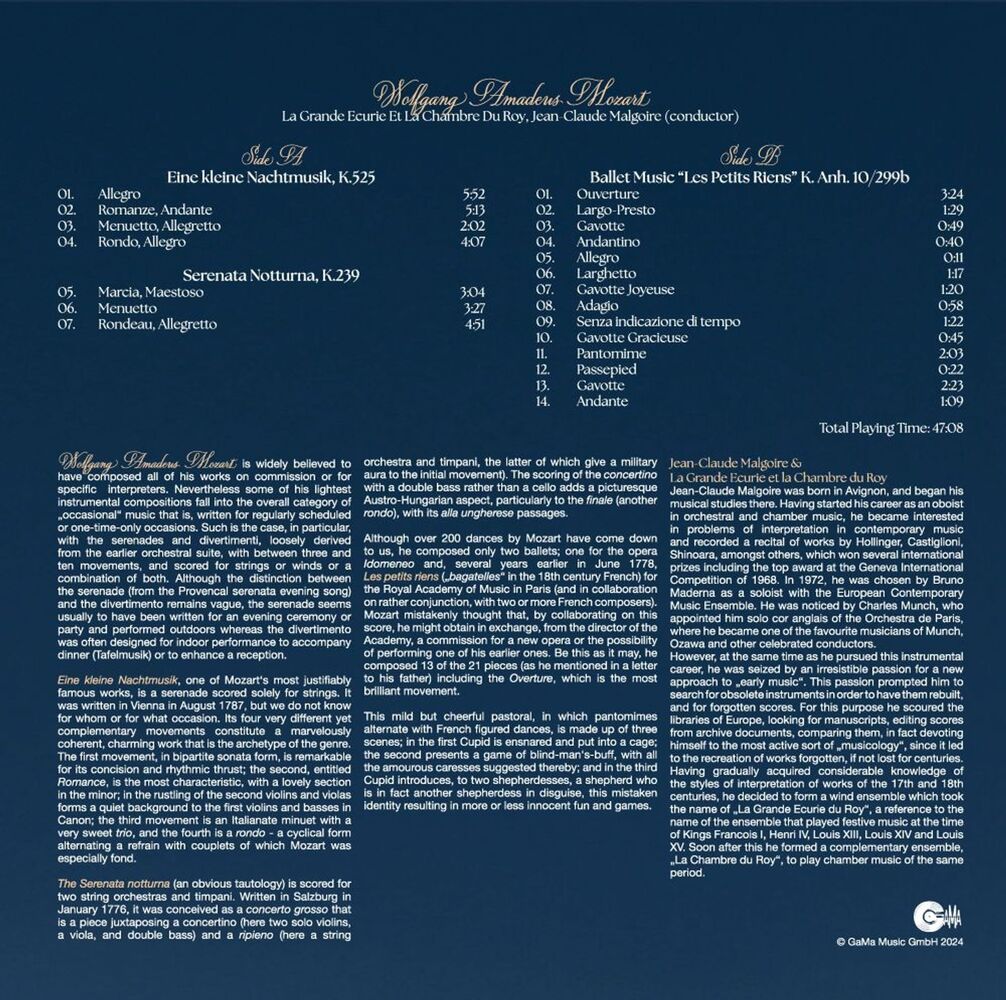
It is generally believed that Mozart composed all of his works on behalf of or for specific performers. Nevertheless, some of his lightest instrumental compositions fall into the general category of "casual music", i.e. they are written for regular or one-off occasions. This is particularly the case with the serenades and divertimenti, which are loosely derived from the earlier orchestral suite, comprising between three and ten movements, and written for strings or winds, or a combination of both. Although the distinction between the serenade (from the Provençal evening song serenata) and the divertimento remains vague, the serenade seems to have been written for an evening ceremony or feast and performed outdoors, while the divertimento was often intended for performance indoors to accompany a dinner or to enrich a reception. A Little Night Music, one of Mozart's most famous works, is a serenade written exclusively for strings. It was written in Vienna in August 1787, but we do not know for whom or for what occasion. The four very different yet complementary movements form a wonderfully coherent, charming work that represents the archetype of the genre. The first movement, in two-part sonata form, is characterized by its conciseness and rhythmic verve; the second movement, entitled Romance, is the most characteristic, with a lovely section in a minor key in which the noise of the second violins and violas provides a quiet background for the first violins and basses in the canon; the third movement is an Italian-style minuet with a very sweet trio, and the fourth movement is a rondo - a cyclical form in which a refrain alternates with couplets and which Mozart particularly loved. The Serenata notturna (an obvious tautology) is written for two string orchestras and timpani. It was written in Salzburg in January 1776 and conceived as a concerto grosso, i.e. a piece in which a concertino (here two solo violins, a viola and a double bass) and a ripieno (here a string orchestra and timpani, which give the first movement a military aura) are juxtaposed. The Concertino's use of a double bass instead of a cello gives the work a picturesque Austro-Hungarian touch, especially the finale (another rondo) with its alla ungherese passages. Although more than 200 dances by Mozart have survived, he composed only two ballets: one for the opera Idomeneo and, a few years earlier, in June 1778, Les petits riens ("Bagatelles" in 18th-century French) for the Royal Academy of Music in Paris (and in collaboration with two or more French composers). Mozart mistakenly thought that by working on this score, he could get a commission for a new opera from the director of the academy or the possibility of performing one of his earlier operas. Be that as it may, he composed 13 of the 21 pieces (as he mentioned in a letter to his father), including the overture, which is the most brilliant movement. This mild but cheerful pastoral, in which pantomimes alternate with French figure dances, consists of three scenes; in the first, Cupid is caught and put in a cage; in the second, a blind man's cow game is performed with all the amorous caresses implied in it; and in the third, Cupid introduces two shepherdesses to a shepherd who is in fact another shepherdess in disguise, whereby this confusion leads to more or less innocent jokes and games.
Features:
- 180g Vinyl
Selections:
Side A
Wolfgang Amadeus Mozart (1756-1791)
Serenade No.13 in G major KV.525 "A Little Night Music"
1. Allegro
2. Romance: Andante
3. Menuetto: Allegretto
4. Rondo: Allegro
Serenade No.6 in D major KV.239 "Serenata notturna"
5. Marcia: Maestoso
6. Menuetto
7. Rondeau: Allegretto
Side B
Ballet Music "Les Petits Riens" KV 299b (for orchestra)
1. Overture
2. Largo - Presto
3. Gavotte
4. Andantino
5. Allegro
6. Larghetto
7. Gavotte Joyeuse
8. Adagio
9. Senza Indicazione di tempo
10. Gavotte Gracieuse
11. Pantomime
12. Passepied
13. Gavotte
14. Andante